
Bitcoin Needs $82,000 Before Recovery Can Start, Analysts Warn
Stuck Below the Line That Matters
Bitcoin is trading in a compressed range well beneath its record high, and according to a recent forecast, the path forward runs through one number: $82,000. Without reclaiming that level, any talk of a sustained recovery remains theoretical.
The $82,000 Threshold and What It Represents
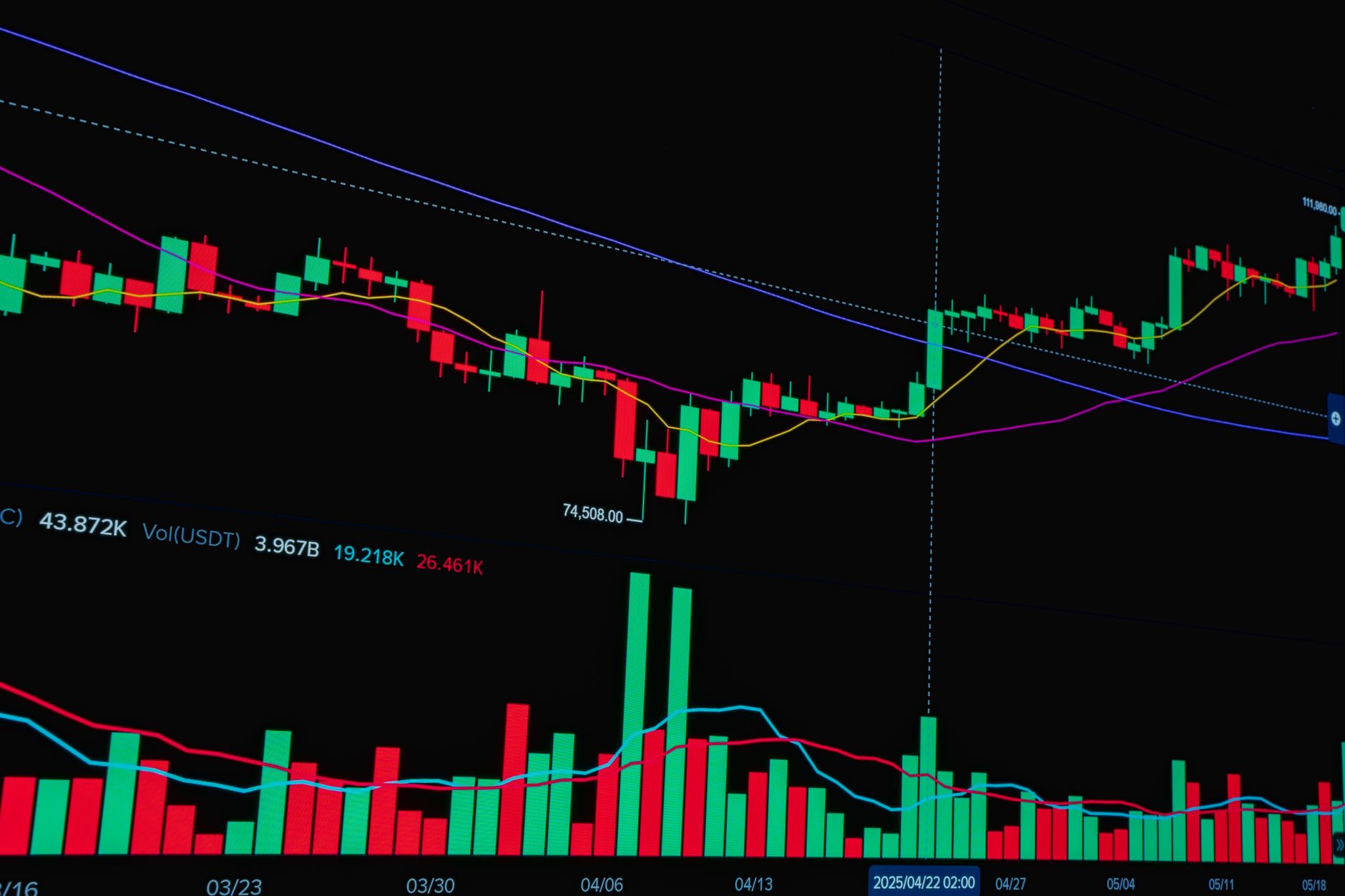
Price forecasts for Bitcoin have coalesced around $82,000 as the minimum condition for a genuine trend reversal. The logic isn’t arbitrary – that level marks a zone where momentum shifted negatively, and reclaiming it would signal that buyers have absorbed enough overhead supply to push higher. Until BTC closes and holds above it, the structure remains broken from a technical standpoint.
The current trading range tells a straightforward story. Bitcoin is not collapsing, but it is not recovering either. It is consolidating at levels that reflect genuine uncertainty about near-term demand, with neither bulls nor bears commanding enough conviction to break the pattern decisively. That kind of sideways compression often precedes a sharp move in either direction – the direction depends heavily on what happens with institutional flows.
Spot Bitcoin ETF inflows have slipped to a cumulative $56 billion. That figure still represents a substantial pool of institutional capital committed to BTC exposure, but the trajectory matters as much as the total. When inflows were climbing, they provided consistent buying pressure that supported price. A slowdown in that pace removes one of the more reliable mechanical supports that characterized Bitcoin’s rally toward its record high.
The ETF channel was widely credited with changing Bitcoin’s demand structure after spot products launched in the United States. Institutional buyers entering through regulated wrappers brought a different kind of participant – one less likely to panic-sell but also less likely to add aggressively when price stalls. With cumulative inflows plateauing near $56 billion, the question is whether that base holds or begins to erode through outflows.

What Happens If $82,000 Doesn’t Hold
The forecast’s framing puts the $82,000 reclaim as a precondition, not a guarantee of further upside. Even if Bitcoin reaches that level, the follow-through depends on volume, ETF flow direction at the time, and broader risk appetite across markets. A weak reclaim – price briefly touching $82,000 before retreating – would likely be interpreted as a failed breakout and could accelerate selling pressure from traders who positioned anticipating a continuation.
Failure to reach $82,000 in the coming weeks carries its own set of implications. Bitcoin trading in a narrow band without an upward catalyst tends to test the patience of leveraged long positions. As those positions get unwound, they create incremental downward pressure that can break range lows. The next identifiable support zones below current prices would then become the reference points for any updated price prediction.
The next few weeks carry disproportionate weight in determining which scenario plays out. If ETF inflows stabilize or reaccelerate, that shifts the probability toward a $82,000 test. If outflows begin to emerge consistently, the range low becomes the more likely target. Either way, the market is approaching a resolution point where the compressed range has to give way to a directional move.
Beyond price levels, there’s a broader question about what a prolonged consolidation does to market sentiment. Bitcoin spent an extended period near its record high generating significant media attention and retail interest. A sustained period of trading well below that high, without a clear narrative driving the next leg up, risks allowing that retail interest to drift toward other assets – including altcoins that offer higher volatility and potential percentage gains even in a Bitcoin-stagnant environment. That dynamic has historically preceded rotation periods in crypto markets.
ETF outflows, if they materialize at scale, would also put managed products in an uncomfortable position. Fund managers holding large BTC positions through ETFs are accountable to investors who entered near highs. Similar overhangs have surfaced in Ethereum markets, where large supply concentrations create structural resistance to price recovery regardless of underlying sentiment. For Bitcoin, the $56 billion in cumulative ETF inflows represents both a support base and a potential source of selling if holders lose patience.
The Forecast’s Narrow Window
The coming weeks matter in a specific, structural way – not because of any single event on the calendar, but because the technical setup that makes $82,000 relevant as a target has a shelf life. The longer Bitcoin trades below that level, the more it becomes resistance rather than a reclaim target. Market participants who might have bought a breakout at $82,000 start to recalibrate their expectations downward, and the level itself loses significance as a decision point.

Cumulative spot Bitcoin ETF inflows sitting at $56 billion with momentum slowing is not a crisis – it is a warning sign with a countdown attached. Bitcoin has recovered from more damaging structural setups before, but each of those recoveries had a specific catalyst: a halving cycle, an institutional announcement, a macro shift. Right now, with $82,000 sitting overhead and ETF flow data softening, the question is what plays the role of catalyst – and whether it arrives before the range breaks in the wrong direction.
Comments are closed, but trackbacks and pingbacks are open.