
SEC and CFTC Set for Aggressive Rulemaking After CLARITY Act Collapse
A Failed Vote Opens the Door to Regulatory Action
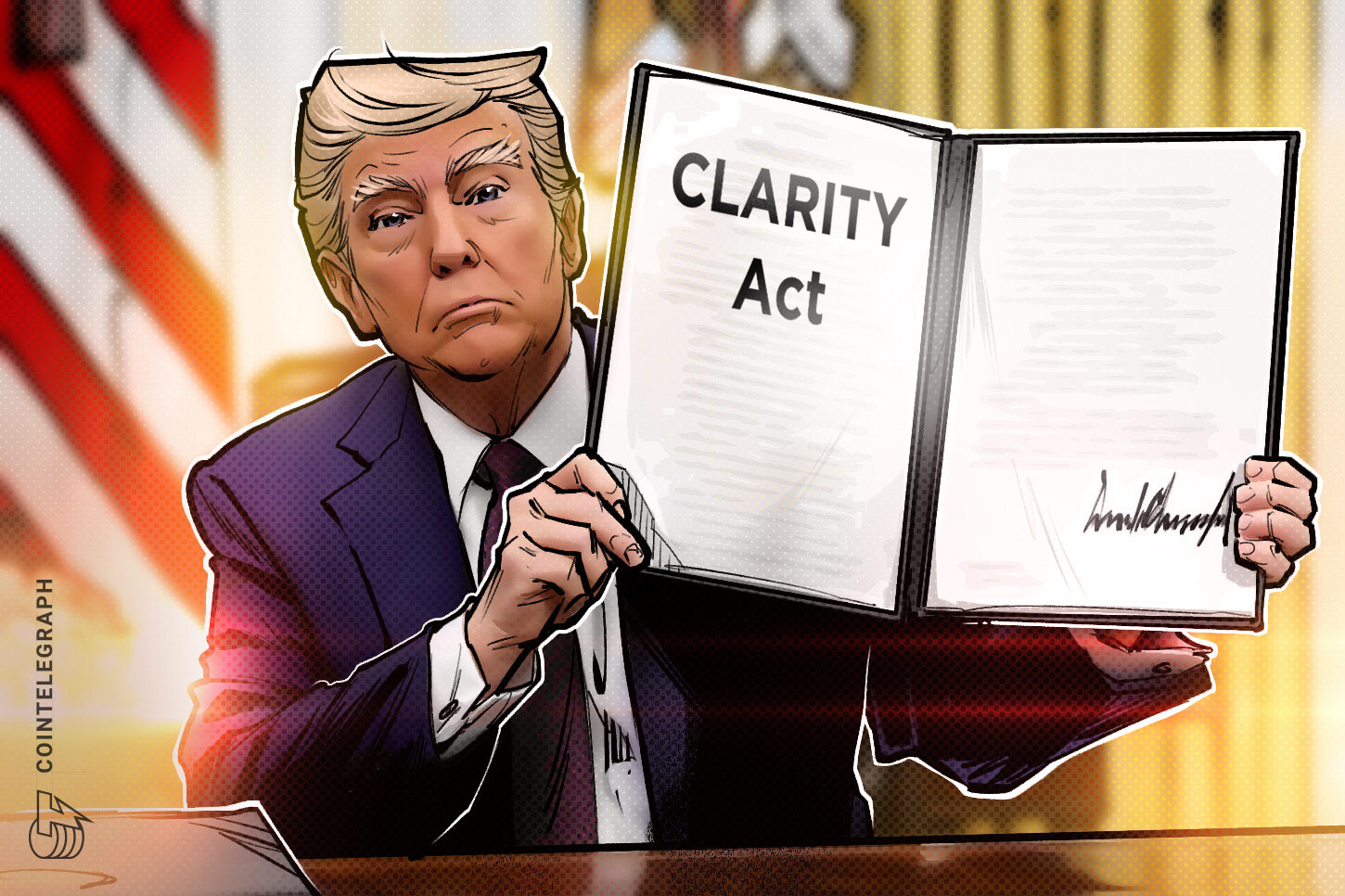
The CLARITY Act is dead – at least for now. After the bill’s cloture vote failed on Tuesday, the window for a negotiated legislative framework on digital assets closed, and two of the country’s most powerful financial regulators are now expected to move without waiting for Congress to catch up. Bernstein, the research and brokerage firm, is forecasting that both the Securities and Exchange Commission and the Commodity Futures Trading Commission will respond with an aggressive push on new rulemaking, compensating for the months spent at the negotiating table while the CLARITY Act worked its way through the legislative process.
This is not a small procedural footnote.
When landmark legislation collapses at the cloture stage – meaning it could not even secure enough votes to proceed to a full Senate debate – it signals more than political failure. It signals that the regulatory vacuum surrounding cryptocurrency, one that has persisted through years of agency turf battles and competing congressional proposals, will now be filled through a different mechanism entirely: the rulemaking authority that the SEC and CFTC already hold and have, in some critics’ view, been restrained about using while legislative solutions were still theoretically possible.
What the CLARITY Act Was Trying to Do
The CLARITY Act was positioned as a way to draw clearer jurisdictional lines between the SEC and CFTC over digital assets – a problem that has generated significant friction in the industry for years. The core issue is that it has never been entirely settled whether most cryptocurrencies should be treated as securities under SEC oversight or as commodities under CFTC jurisdiction. That ambiguity has produced enforcement actions, court battles, and competing regulatory interpretations that have made compliance difficult for exchanges, token issuers, and institutional players trying to operate within the law.
The bill’s supporters argued that Congress was the right body to draw those lines, because the alternative – letting the agencies define their own boundaries through enforcement and rulemaking – tends to produce inconsistent outcomes and can shift based on which administration holds office. With the cloture vote failing on Tuesday, that congressional path is effectively blocked, at least in the near term. Returning to the same legislation in the current session would require rebuilding political consensus that clearly does not exist at the necessary threshold.
Bernstein’s read is that the SEC and CFTC will not sit quietly while that political process stalls. The time already spent negotiating the CLARITY Act’s terms represents a window during which both agencies moderated their independent regulatory activity, anticipating that a legislative solution might arrive. That window has now closed, and Bernstein expects the agencies to move quickly to make up for it.

What Aggressive Rulemaking Actually Looks Like
Rulemaking differs from enforcement in an important way: it sets forward-looking standards rather than punishing past behavior. When a federal agency like the SEC or CFTC initiates a formal rulemaking process, it publishes proposed rules, accepts public comment, and eventually issues binding regulations. The result has the force of law without requiring congressional approval, though it can be challenged in court. For the crypto industry, the difference between a rulemaking environment and an enforcement-first environment is significant – rulemaking at least provides some advance notice of what compliance looks like, even if the rules themselves are unfavorable.
Bernstein’s expectation that the rulemaking will be “aggressive” suggests the firm anticipates regulations that go beyond clarification and into substantive restriction or expansion of agency authority over digital assets. Both the SEC and CFTC have existing statutory frameworks they can work within – the Securities Act of 1933 and Securities Exchange Act of 1934 on the SEC’s side, and the Commodity Exchange Act on the CFTC’s side. The question is how broadly each agency interprets those frameworks when applying them to tokens, decentralized protocols, and crypto trading platforms that were not contemplated when those laws were written.
Whether both agencies coordinate their rulemaking efforts or proceed independently will shape how coherent the resulting regulatory environment looks. Historically, the SEC and CFTC have not always moved in lockstep on crypto issues, and jurisdictional overlap has been a persistent source of confusion. If both agencies now accelerate simultaneously without a legislative framework to arbitrate between them, the industry may end up with overlapping or contradictory rules rather than the clarity the CLARITY Act was supposed to deliver. That scenario – heavier regulation without cleaner jurisdiction – is precisely what critics of the enforcement-first approach have warned about for years.

Industry and Market Implications
For exchanges, token issuers, and institutional participants that had been monitoring the CLARITY Act’s progress, the cloture failure changes the strategic calculus. Compliance teams that were waiting for legislative clarity before making structural decisions about custody arrangements, token classifications, or trading desk operations now face a more uncertain timeline. Agency rulemaking processes can take months or years to complete, and the rules that emerge can be challenged in federal court, extending uncertainty further. Nigeria’s financial regulators have faced similar questions about whether to adopt structured frameworks or proceed through agency action, illustrating that the tension between legislative and regulatory approaches to crypto is not unique to the United States. The practical pressure on U.S.-based firms is immediate, particularly for those operating in product areas – staking, lending, spot trading of certain tokens – where the SEC’s position has already been signaled through past enforcement but never formally codified through rulemaking.
Bernstein’s forecast carries weight precisely because it is grounded in institutional pattern recognition rather than political speculation. When legislation fails and agencies have already indicated they view their existing authority as sufficient, the natural institutional response is to use that authority. The only question is how broadly and how fast.
The CFTC has, in recent years, argued for expanded jurisdiction over crypto spot markets – authority it does not currently hold without congressional action. Whether the agency now attempts to advance that argument through rulemaking, and whether the courts would sustain it, is an open question that the CLARITY Act’s collapse leaves unresolved. Meanwhile, the SEC under its current leadership has not retreated from the position that most digital tokens meet the definition of a security, a view that the crypto industry has contested in litigation and that several federal courts have evaluated with mixed results. Two agencies, two aggressive rulemaking agendas, and no legislative referee in sight.
Comments are closed, but trackbacks and pingbacks are open.