
Bitcoin Nears $98K After Five-Week Compression, Macro Week Looms
A Squeeze Five Weeks in the Making
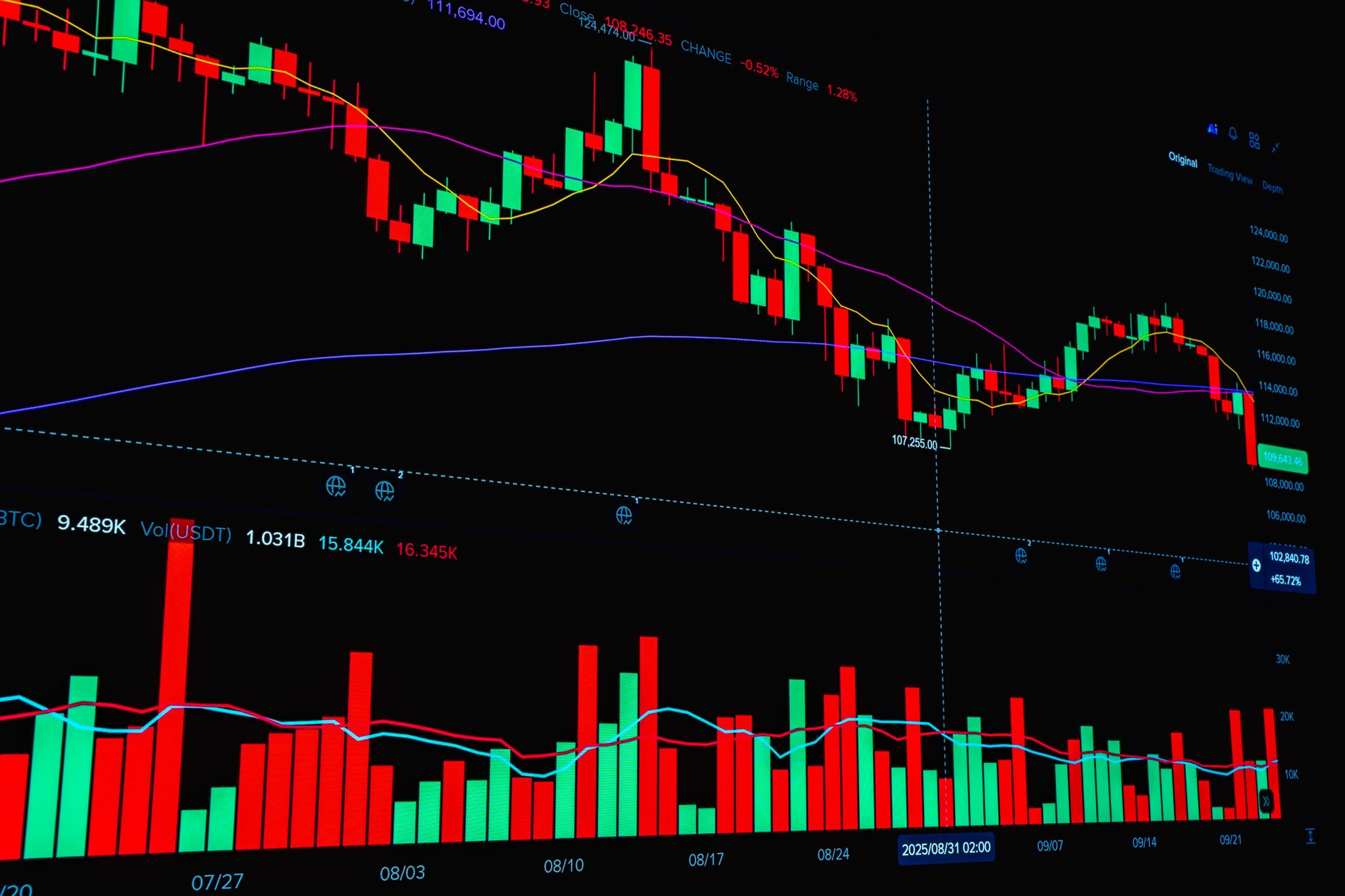
Bitcoin has spent the better part of five weeks grinding through a tight price range, and the pressure building inside that compression is now pointing toward $98,000 as the next meaningful level. U.S. demand for Bitcoin has picked up noticeably during this period, adding weight to the argument that the consolidation is coiling toward a breakout rather than a breakdown. The setup is technical, but the week ahead is anything but – a dense schedule of macroeconomic data releases and central bank signals could either confirm the move or cut it short before it starts.
What makes this moment distinct is the collision between a maturing Bitcoin structure and a macro environment that refuses to stay quiet.
Rising Treasury yields are already applying pressure to risk assets broadly, and Bitcoin, despite its increasingly institutional character, has not decoupled from that dynamic. If yields push higher on the back of strong economic data or hawkish Federal Reserve commentary, the same U.S. demand that has been quietly accumulating could reverse fast – and a five-week squeeze that resolves to the downside tends to resolve hard.
Three Signals That Will Define the Week
Traders watching Bitcoin’s approach toward $98,000 are tracking three specific signals that could determine whether this compression ends in a breakout or a failed attempt. The first is U.S. demand flow – the uptick in American buyers entering the market has been one of the cleaner reads on renewed retail and institutional interest. When domestic demand leads a Bitcoin move, it often carries more staying power than offshore-driven volume spikes, which tend to be more speculative and shorter-lived. A continuation of that demand trend into this week would strengthen the case for price expansion beyond the current range.
The second signal is Treasury yield direction. The 10-year yield has been climbing steadily, and Bitcoin’s price action has historically softened when that number pushes into territory that makes fixed-income alternatives more attractive. The relationship is not mechanical, but it is consistent enough that a yield spike this week – particularly if triggered by hotter-than-expected inflation or employment data – would introduce real headwinds for a market already trading near resistance. The degree to which Bitcoin holds above key support levels during any yield-driven selloff will say a great deal about the strength of the current accumulation.
The third signal is macro volatility itself. This is a calendar-heavy week, and that means positioning into the data tends to suppress clean directional moves. Markets often wait, hedge, or partially unwind into major releases. For Bitcoin, that means the window for a clean breakout toward $98,000 may be narrower than the technical setup suggests – not because the structure is weak, but because macro events can override technical setups entirely when the data surprises in either direction.

The Demand Story Underneath the Price
The renewed U.S. demand signal is worth examining on its own terms. After months in which offshore markets – particularly Asian trading hours – dominated Bitcoin’s volume profile, the shift back toward American market participants carries implications for both price behavior and broader sentiment. U.S.-driven demand tends to correlate with spot buying rather than derivatives activity, which means it builds genuine market depth rather than just layering open interest onto an already-leveraged structure. That distinction matters when the market approaches resistance zones like $98,000, where paper positions often get flushed before price can advance further.
The five-week squeeze that preceded this setup has also had the effect of clearing out much of the speculative excess that built up during earlier price surges. Extended consolidation periods, when they resolve without a catastrophic breakdown, often leave the market structure cleaner than it was before – tighter spreads, lower funding rates, and a more measured distribution of open interest across price levels. Whether that cleanup is complete enough to sustain a push toward and through $98,000 is the question that this week’s data may help answer.
There is also the question of what happens if $98,000 gets tagged but fails to hold. A rejection at that level after a five-week buildup would not be a neutral event. Traders who positioned for the breakout would face losses, stop orders below the range would trigger, and the narrative around Bitcoin’s strength would take a hit at precisely the moment macro conditions are already working against risk appetite. The asymmetry here is real – a clean breakout confirms bullish structure, but a failed attempt at $98,000 could undo weeks of patient accumulation in a matter of hours.

Yield Risk and the Week Ahead
Treasury yields represent the most direct external threat to Bitcoin’s breakout attempt this week. Rising yields compress the multiples assigned to risk assets by making the risk-free rate more competitive, and while Bitcoin does not trade on earnings multiples the way equities do, it still responds to the same capital allocation pressures that push investors toward or away from risk. When institutional portfolios face margin pressure from rising rates, Bitcoin is frequently among the first positions trimmed – not because investors have lost conviction, but because it remains one of the more liquid ways to raise cash quickly without moving through thinly traded markets.
Macro volatility compounds this problem. High-volatility macro weeks create conditions where even strong technical setups get overridden by forced repositioning, risk-off flows, or simple uncertainty. Bitcoin has navigated these environments before, sometimes impressively, but the consistency of that navigation is not something traders can rely on. The $98,000 target is real and technically supported. The macro calendar threatening it this week is equally real.
The actual breakout, if it comes, will arrive on Bitcoin’s own schedule – not the macro calendar’s. And the signal that matters most when it does is whether U.S. spot demand is still there on the other side of whatever this week delivers.
Comments are closed, but trackbacks and pingbacks are open.