
Bitcoin Horse Racing Bets: Field Size, Place Terms, Dead Heats
How Field Size Controls What Your Place Bet Actually Pays
Horse racing bets don’t behave like football or tennis wagers. The number of horses in the race at the starting gun determines how many finishing positions pay out on a place bet – and a single late withdrawal can shift that number after you’ve already placed your money. For anyone using Bitcoin to bet on racing, the mechanics of place terms, dead heats, and non-runner deductions deserve the same attention as picking the horse itself.
Crypto sportsbooks running horse racing markets – Dexsport being the clearest current example – typically structure their offering around three core bets: Win, Place, and Fixed Top 2. Each one has a different payout logic, and understanding the difference between them before the field declares is how you avoid surprises at settlement.

Three Markets, Three Different Bets
The Win market is the most straightforward: the horse must finish first. The Place market pays if the horse finishes inside the number of paid positions, at that horse’s specific place price – not a fraction of its win odds. Fixed Top 2 at Dexsport locks in a price at the moment you place the bet, and the horse must finish first or second for it to pay. Because more outcomes count as a win on place bets, the returns are lower than win bets by design.
The separation between place price and win price is worth sitting with for a moment. Many bettors arriving from traditional sportsbook backgrounds expect place returns to be calculated as a fraction of win odds – one-quarter or one-fifth odds being standard in UK bookmaking. Dexsport runs a separate place market with its own quoted price per runner, so what the market is offering on a place bet doesn’t mechanically follow from the win price at all. Check both numbers independently before committing funds.
Place Terms by Field Size – and Where Dexsport Differs from UK Norms
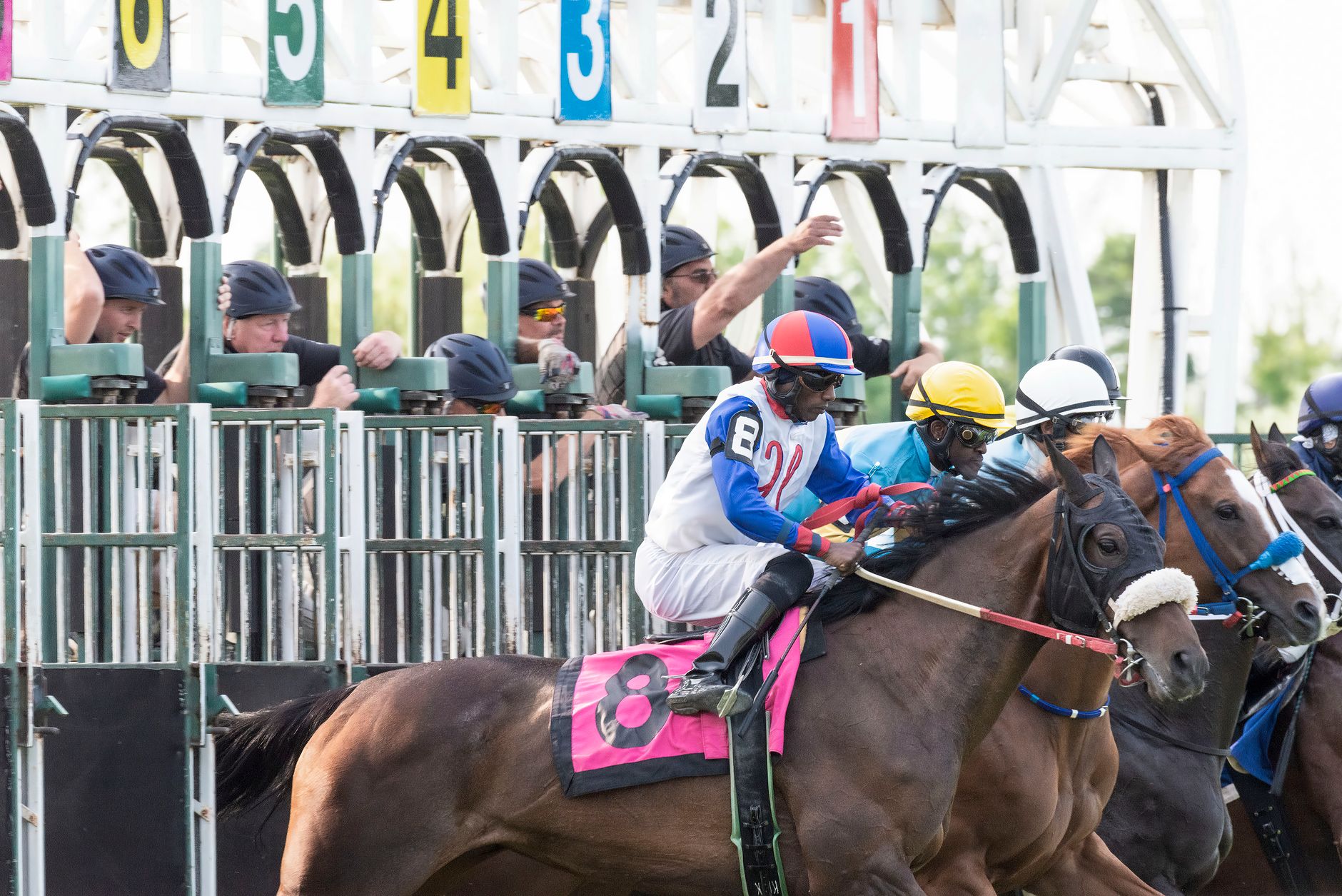
Field size at the start of the race is the variable that sets how many places pay. Dexsport’s published terms as of September 2026 show: races with 16 or more runners pay three places; 8 to 15 runners also pay three places; 5 to 7 runners pay two places; and fields under five runners are Win-only, with place bets voided. Fixed Top 2 is available across field sizes where applicable.
Standard UK bookmaker terms diverge from Dexsport’s structure in one notable spot. In handicap races with 16 or more runners, most UK firms pay four places. Dexsport pays three regardless of whether the race is a handicap. That gap matters if you’re crossing between a UK bookmaker account and a crypto platform – the same race, the same finishing position, can produce a winning bet on one platform and a losing one on the other.
Late withdrawals add another layer. If a horse pulls out after betting opens and the remaining field drops below a size threshold – say, from nine runners to seven – the place terms for that race change. Bets already placed are settled under the revised terms that apply to the smaller field. A race you entered expecting three-place payouts can shift to two-place payouts before the horses even leave the stalls.
Dexsport’s market also covers thoroughbred, harness, and greyhound racing under the same structure, with minimum bets starting at $1. The place terms table applies across race types, though greyhound fields, which tend to run smaller, will hit the lower thresholds more frequently than thoroughbred card races.
Rule 4 Deductions, Dead Heats, and Ante-Post Stakes
Three scenarios can alter the settlement of a bet you’ve already placed. The rules below reflect the Tattersalls framework standard across UK and Irish racing, with individual operator rules taking precedence where they differ.
When a horse withdraws after you’ve taken a fixed price, the remaining runners become statistically more likely to win – making your original price look better than it should. Rule 4 corrects this by deducting a percentage from winnings, calibrated to the withdrawn horse’s starting price. A non-runner priced between 10/1 and 14/1 triggers a 5p-in-the-pound deduction. A non-runner priced at 1/9 or shorter triggers a 90p deduction. Horses priced above 14/1 don’t trigger any deduction at all. Multiple withdrawals stack together, but the total deduction is capped at 90p in the pound. Critically, the deduction applies to winnings only – the stake is never touched.
Dead heats work differently. When judges cannot separate two horses, the dead heat rule splits the stake. Back a horse at 4/1 with $10, and if it dead-heats for first, the bet settles as $5 at 4/1 – returning $25 – while the other $5 is treated as a loser. The same principle applies to place markets: if two horses tie for the final paid position, a place bet on either one settles at half stake on full odds. The return drops, but doesn’t vanish entirely.
Timing of the original bet also matters for horses that don’t run at all. A same-day bet on a horse that is later withdrawn typically returns the stake in full. Ante-post bets – struck days or weeks before the race – usually settle on an all-in basis, meaning the stake is lost if the horse never starts. This is one reason ante-post betting carries a premium: you’re absorbing the risk that the horse never makes it to the track.
Depositing Bitcoin Before a Race Card Starts
Horse racing runs on a fixed clock. Markets close when the race starts, with no exceptions. Bitcoin’s block confirmation time – averaging one block every ten minutes, with most sportsbooks crediting after one to three confirmations – means a deposit can take 30 minutes or more to appear in your betting balance during periods of network congestion. Depositing an hour before the first race you intend to back gives the transaction room to confirm without cutting into the card.
For last-minute funding, stablecoins on Tron or Solana confirm in seconds rather than minutes, which eliminates the timing risk entirely. The choice between BTC and USDT also carries a secondary consideration: Bitcoin’s price can shift meaningfully during a long afternoon of racing, so the dollar value of funds sitting in a BTC balance between bets is not fixed. A USDT balance doesn’t carry that exposure. Neither option is universally better – the right call depends on how long you’re holding funds between bets and how comfortable you are with BTC price movement on short time horizons.

What the first race of the day looks like on your screen is simpler than the rules underneath it. A $1 minimum bet on a 12-runner race at Dexsport lands you in a three-place market, subject to any withdrawals that arrive between your deposit confirmation and the off time – and if the field drops to four, your place bet voids entirely while your win bet survives.
Comments are closed, but trackbacks and pingbacks are open.