
Blackjack Side Bets Cost Four Times More Than the Main Hand
The Price of Chasing Bigger Payouts
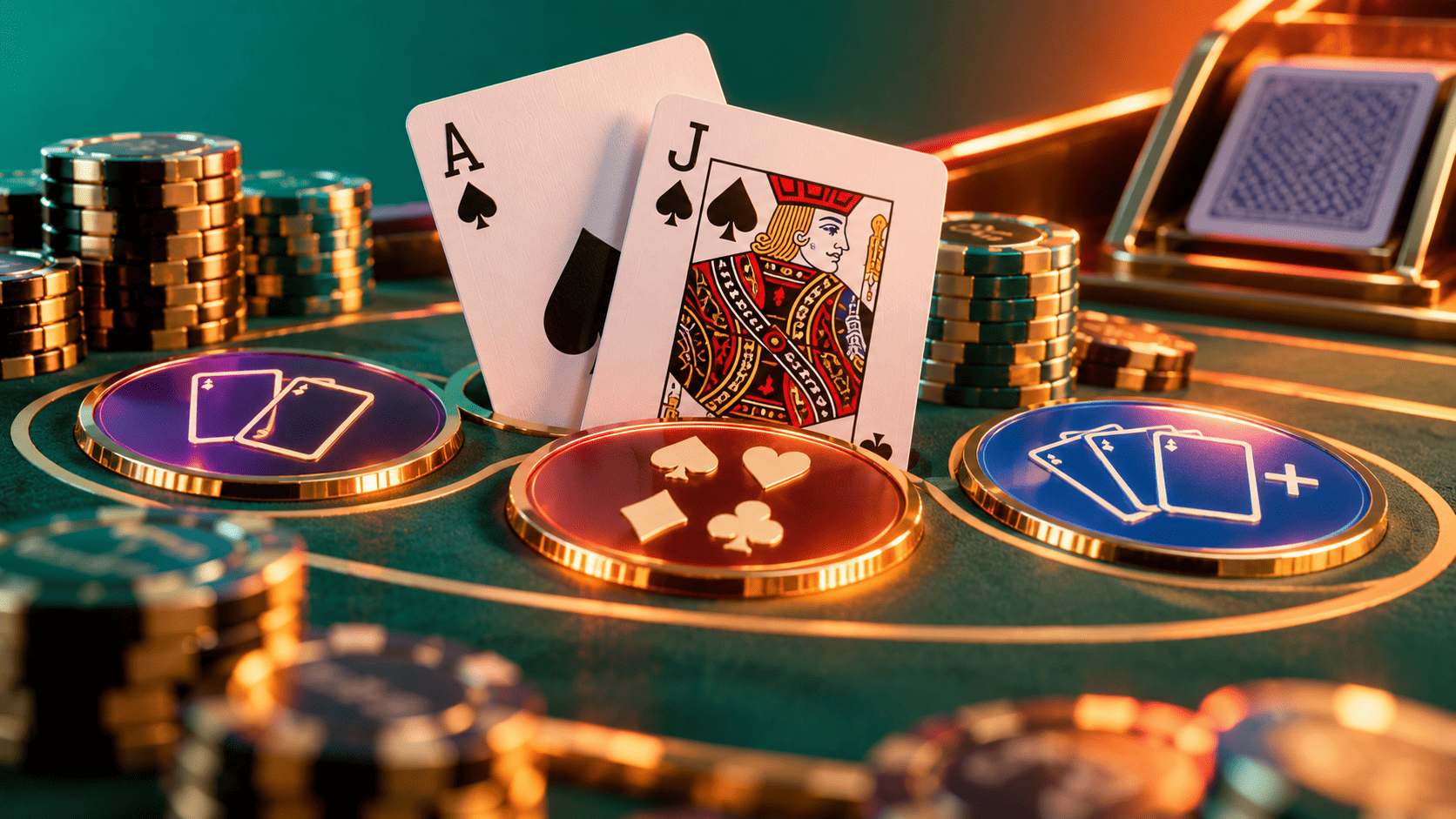
Blackjack, played with basic strategy, carries a house edge of roughly 0.5% – one of the lowest figures in any casino format. Side bets occupy a separate circle on the table and advertise payouts as high as 100:1, which sounds like a reasonable trade for a small extra stake. It is not a reasonable trade, and the math behind it is straightforward enough that every player should see it before putting chips down.
The two side bets appearing most often at live tables – Perfect Pairs and 21+3 – each carry edges several times larger than the main hand, and those edges apply to every single deal regardless of how skillfully the rest of the hand is played.
Both bets settle before strategy enters the picture at all.
How Perfect Pairs Actually Works
Perfect Pairs pays out when the player’s first two cards share a rank. The payout scales with how closely the two cards match. On a standard eight-deck paytable, a perfect pair – two cards of identical rank and suit, such as two kings of hearts – pays 25:1 and occurs roughly 1.69% of the time. A coloured pair, meaning two cards of the same rank and color but different suits (king of hearts and king of diamonds, for example), pays 12:1 and appears about 1.93% of the time. A mixed pair, same rank but different colors, pays 6:1 and comes up in approximately 3.86% of deals. Any pair of any kind lands about 7.5% of the time across all three categories combined.
Those payouts, combined with their respective probabilities, produce a house edge of approximately 4.10% on this common paytable. Evolution, one of the largest live casino studios in operation, publishes a return figure of 95.90% for a comparable paytable – confirming the 4.10% cost from the house side. That is more than eight times the edge on the main hand under basic strategy.
The structure of the bet means no decision made during the main hand – whether to hit, stand, double, or split – affects what Perfect Pairs has already settled. Once the first two cards fall, the bet is resolved.
The 21+3 Structure and Its Paytable Variations
21+3 works differently. It combines the player’s first two cards with the dealer’s face-up card and evaluates the resulting three-card combination as a poker hand. Modern five-tier paytables assign the following payouts on an eight-deck table: suited trips (three cards of identical rank and suit, such as three sevens of clubs) pay 100:1 and occur just 0.02% of the time; a straight flush pays 40:1 at a 0.21% probability; three of a kind in mixed suits pays 30:1 and appears 0.52% of the time; a straight pays 10:1 with a 3.10% probability; and a flush pays 5:1, appearing in roughly 5.88% of deals.
That five-tier paytable carries a house edge of approximately 3.70%, translating to a 96.30% return. Older paytables that pay a flat 9:1 on any qualifying three-card hand come in at a lower edge of around 2.74% with eight decks – meaning the more visually exciting paytable with the 100:1 jackpot prize at the top actually costs more per dollar than the older, simpler version.
The 100:1 suited trips payout draws attention precisely because it reads like a jackpot. At a 0.02% occurrence rate, a player would need to see roughly 5,000 hands before expecting to hit it once – and that expectation is statistical, not guaranteed.
What the Cost Looks Like Over 100 Hands
A direct comparison across 100 hands makes the difference between the main hand and side bets concrete. Using a $10 main bet alongside a $5 side bet, with the main game running at 0.5% under basic strategy, the expected cost of the main hand over 100 deals is approximately $5. The same 100 hands with a $5 wager on 21+3 at 3.70% produces an expected cost of roughly $18.50. A $5 Perfect Pairs bet at 4.10% over the same 100 hands costs an expected $20.50.
Half the stake on the side bet generates approximately four times the expected cost of the main hand. The word “expected” carries weight here – short-run variance is wide enough that side bets frequently feel profitable on a given night, which is exactly what makes them sticky. A single suited trips hit at 100:1 on a $5 bet returns $500 and erases the statistical picture entirely in the moment.
Actual results vary widely from these figures in any individual session. The edge works slowly and consistently in one direction over volume, not in single-night snapshots.
Live Table Variations and Platform Specifics
Live studios extend the side bet menu well beyond Perfect Pairs and 21+3. Evolution’s Infinite Blackjack, for instance, runs Hot 3 and Bust It bets alongside the standard pair and 21+3 options. Other studios offer Lucky Ladies or progressive jackpot structures that can further alter the return percentages. Paytables are not standardized across tables or providers, so the edge figure on 21+3 at one table may differ from the same-named bet on another.
Dexsport lists 648 live blackjack tables – the largest live category in its lobby – drawing from studios including Evolution, Playtech Live, Ezugi, and Pragmatic Play Live. Because each studio maintains its own paytables, the side bet menus and their respective edges differ from table to table across the platform. Dexsport operates under an Anjouan licence through Dexapp LTD. The platform also applies a two-times deposit turnover requirement before withdrawal, and blackjack hands – side bets included – count toward that figure.
Before placing any side bet at a live table, opening the help panel to find the published return percentage takes about ten seconds and reveals exactly how much the bet costs relative to the main hand. Most players skip that step, which is why the bets remain a consistent revenue line for studios running them at scale.
Reading the Actual Edge Before Betting
The simplest takeaway from comparing these numbers: side bets are not supplementary entertainment layered cheaply onto the main game. On a $5 side bet running parallel to a $10 main bet, the side bet is expected to cost more than four times as much per session – despite representing half the stake. That ratio holds whether the player is at a physical table or a live-streamed studio on a crypto platform.
The reason players keep placing them, session after session, is that variance delivers the wins visibly and immediately – a 25:1 perfect pair payout mid-shoe is memorable in a way that the slow, invisible drain of a 4.10% edge is not. The 100:1 suited trips hit on 21+3 generates a story. The 97 hands that went nowhere generate nothing except a smaller chip stack.
At Dexsport, where the live blackjack section draws from four separate studio providers, a player moving between tables could encounter meaningfully different 21+3 edges – the gap between an older 9:1 flat paytable at 2.74% and a modern five-tier paytable at 3.70% represents a 35% increase in expected cost on the same named bet, for the same stake, at the same table game.
Comments are closed, but trackbacks and pingbacks are open.